Five years remain until the deadline of a United Nations campaign that truly left a major mark on the world stage. The 17 Sustainable Development Goals were not just a blueprint for global change and prosperity for all; they set a collective agenda aimed at seeing tangible progress on humanity’s greatest challenges.
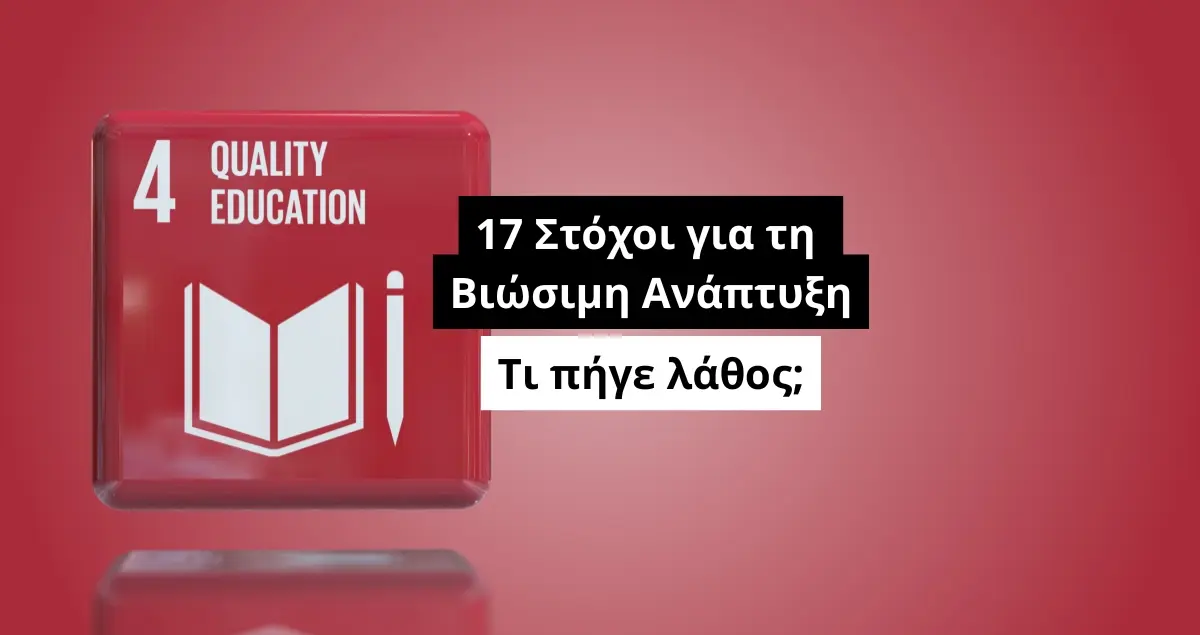
No Poverty, Zero Hunger, Good Health and Well-being, Quality Education, Gender Equality, Clean Water and Sanitation, and of course Climate Action, Life Below Water, and many others. The Global Goals were adopted in 2015 in New York to define a way of envisioning a better future—creating a framework through which we could track just how close we are to reaching them.
How far away, rather, would be the more accurate phrasing. According to the latest UNESCO Global Education Monitoring (GEM) Report, progress when it comes to Education (Goal 4) has fallen severely short. The report reaches a sober conclusion: not a single one of the global targets for education is on track to be achieved by 2030.
The Data Blind Spot To course-correct, you first need to know where you stand. Yet, the biggest hurdle in evaluating global education is the lack of adequate, timely, and comparable data.
While participation indicators—such as how many children are enrolled in school—have recent data available for nearly 90% of countries, complex quality indicators remain shrouded in darkness. Countries like Libya have no data at all for 96% of the indicators, while even high-income nations face challenges in reporting standardized figures.
Furthermore, equity disaggregation—tracking whether education reaches children equally regardless of gender, wealth, geographic location, or language—is adequately captured mostly in lower-income countries that run dedicated household surveys. This leaves massive blind spots on the global progress map.
The "Green Curriculum" Reality Check The GEM Report places a spotlight on Target 4.7, which calls on governments to ensure all learners acquire the knowledge and skills needed to promote sustainable development, human rights, gender equality, and global citizenship.
For the first time, a comprehensive evaluation across 110 countries measured the presence of green keywords in national curriculum frameworks and subject syllabi (across Science and Social Studies) for Grades 3, 6, and 9. The findings reveal a stark gap between policy goals and classroom reality:
Selective Focus: Most countries do not offer a balanced sustainability education. Instead, they pick specific "safe" topics while neglecting others.
Climate Change is Missing: While general "environmental protection" is mentioned almost everywhere, climate change is completely absent from Grade 3 syllabi in 78 out of 110 countries, and missing from Grade 6 syllabi in 50 countries.
Delayed Exposure: The younger the student, the less likely they are to learn about the climate crisis or biodiversity loss. Educational systems consistently defer these critical topics to older grades.
Education Out of Touch with the Century? The picture is equally concerning in other vital areas. In life-skills-based HIV and sexuality education, only 43% of primary schools globally provide coverage, with provision falling below 55% in secondary schools across sub-Saharan Africa.
The verdict is clear: The 2030 targets are not slipping away because they were overly ambitious, but because education systems remain anchored in outdated structures. Unless governments make a drastic shift over the next five years—demanding data transparency and genuinely integrating climate and social realities into school curricula—2030 will arrive with a generation ill-equipped for the defining challenges of our time.